
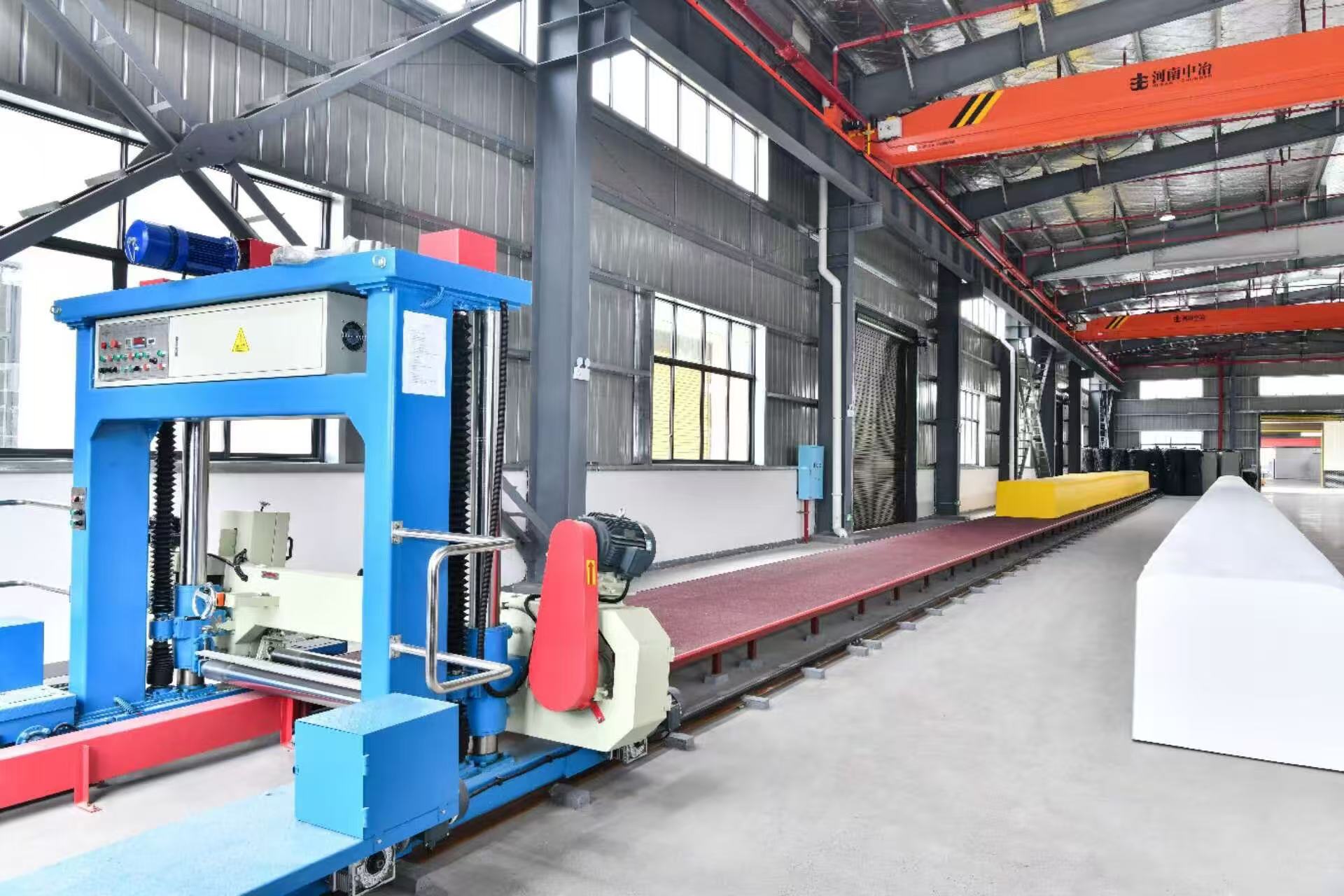
Q: We need to produce high-resilience PU foam and slow-rebound memory foam among other products. How should we choose the foaming machine type, and what key parameters matter?
A: Match the machine to the product. Focus on the following points.
Choose by Process Type
- Continuous foaming machine: best for large batches of standard foam (mattresses, seat cushions); high output (500 kg/h and above), but demands stable raw materials.
- Batch foaming machine: best for small custom batches (e.g. shaped memory-foam pillows); flexible recipes, but a longer cycle time of about 3–5 minutes per mould.
Key Parameters
- Mixing pressure: ≥8 bar for high-resilience foam (fine cells); 6–8 bar for memory foam (avoid over-shearing).
- Temperature accuracy: ±0.5°C for high-resilience foam (affects open-cell ratio); ±1°C for memory foam (controls gel time).
- Max output: 200–300 g/s for high-resilience foam; 100–200 g/s for memory foam.
Special Features
- Memory foam needs a secondary curing oven (60–80°C).
- For high-resilience foam, choose a machine with a vacuum de-foaming system to reduce bubble defects.
Notes
- Prefer modular designs for easy future upgrades (e.g. adding a flame-retardant dosing module).
- Verify the supplier’s case experience and ask for trial reports of similar products.